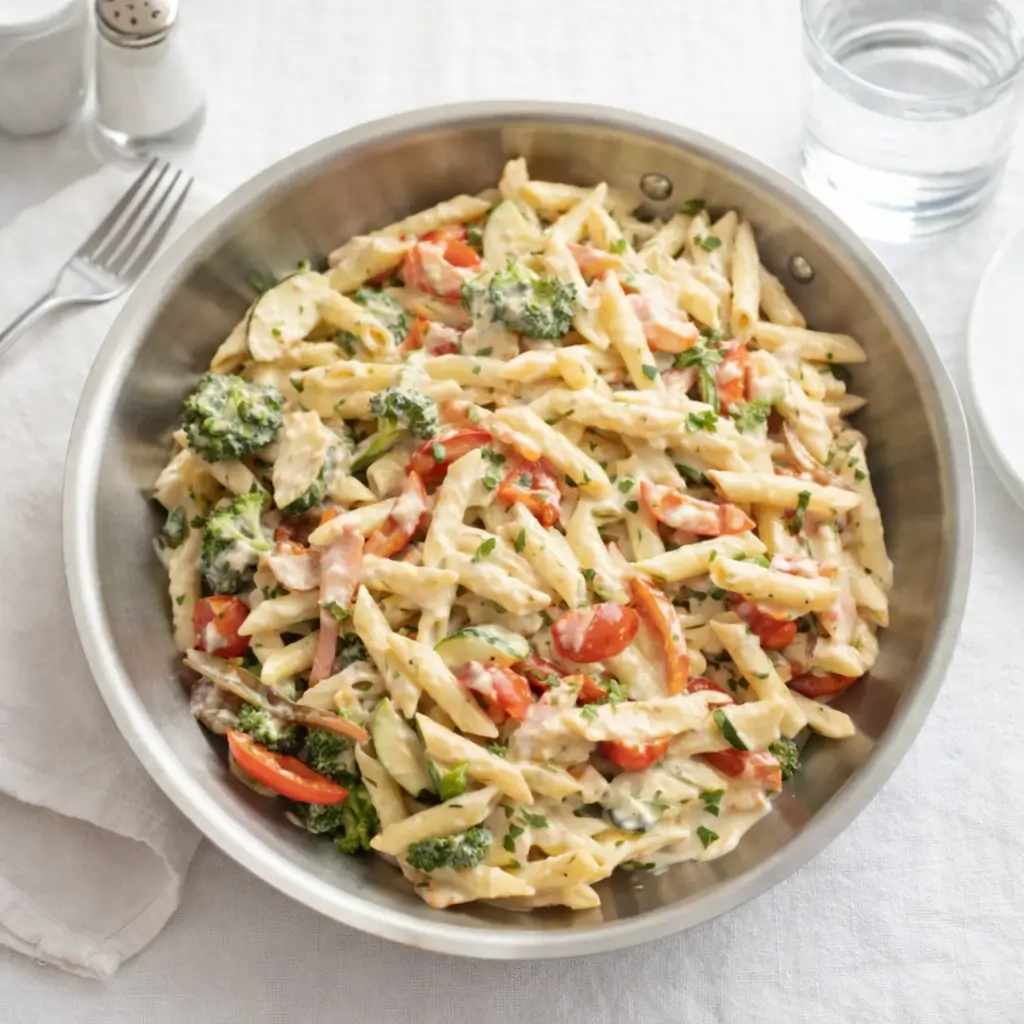
Pasta Primavera is the kind of dish that makes you feel like you’ve just brought an Italian trattoria into your own kitchen. It’s creamy, vibrant, and filled with enough vegetables to make you feel slightly smug about eating something wholesome. Whether you’re wrangling picky eaters, trying to sneak in your daily greens, or just craving a comforting bowl of something delicious, Pasta Primavera hits that sweet spot between indulgent and fresh. The best part? You don’t need fancy ingredients or hours of prep—just a good skillet, some pasta, and a fridge full of veggies.
In under 45 minutes, you’ll have a colorful, restaurant-worthy meal that tastes like sunshine on a plate. And trust me, once you taste that creamy herb sauce coating every bite of penne and crisp-tender vegetables, you’ll be tempted to make this every week.
Table of Contents
What is Pasta Primavera?
Simply put, Pasta Primavera is a celebration of spring in a bowl. “Primavera” means “spring” in Italian, and the dish was originally designed to showcase the bounty of seasonal vegetables. Think of it as pasta’s answer to a garden party — bright, colorful, and completely irresistible. Traditionally, the dish combines pasta (like penne or ziti) with lightly sautéed vegetables, then tosses everything in a light cream or olive oil sauce with herbs and cheese. The result? A perfect balance between creamy and crisp, comfort and freshness.
Unlike heavy Alfredo or tomato-based sauces, Pasta Primavera’s charm is in its lightness. It lets every vegetable shine, from tender broccoli to sweet bell peppers. If you’ve ever tried my Lemon Zucchini Pasta, you already know how magical that blend of creamy and zesty can be — this dish takes it to the next level.
Reasons to Try Pasta Primavera
If you need convincing (though you probably don’t), here’s why Pasta Primavera deserves a spot in your weekly rotation:
- It’s a veggie lover’s dream – With 7 cups of colorful vegetables, this pasta packs nutrients, flavor, and crunch into every bite.
- Quick and easy – Dinner’s on the table in under 45 minutes. Perfect for weeknights when you want something fancy without spending all night in the kitchen.
- Customizable – Use whatever vegetables you have on hand. Zucchini, mushrooms, asparagus — anything goes!
- Family-friendly – Even kids who “don’t like veggies” tend to go for this one, especially with that creamy sauce.
- Leftovers that reheat beautifully – Okay, maybe almost beautifully (it’s cream sauce, after all), but close enough to make lunch the next day something to look forward to.
If you’re already a fan of veggie-forward dishes, check out my Homemade Creamy Vegetable Soup — it pairs perfectly with this kind of comfort food vibe.
Ingredients Needed to Make Pasta Primavera
Here’s what you’ll need to bring this colorful dish to life. Don’t worry — most of these are probably already in your kitchen.
Sauce:
- 1¼ cups chicken broth
- 1¼ cups half and half
- ½ chicken bouillon cube
- 1 teaspoon soy sauce
- 1 teaspoon hot sauce (trust me, it’s not spicy — it’s flavor magic)
- ¾ teaspoon each: dried parsley, basil, oregano, mustard powder
- A pinch of red pepper flakes
Vegetables and Pasta:
- 2 tablespoons olive oil
- 2 cups broccoli florets (bite-sized pieces)
- ½ cup carrots, julienned
- ½ cup red onion, sliced
- 1 cup red bell pepper, sliced
- ½ zucchini, cut into chunks (about 1½ cups)
- ½ cup frozen peas
- 1 cup cherry tomatoes, halved or quartered
- Salt and pepper to taste
- 3 tablespoons butter
- 3 cloves garlic, minced
- 3 tablespoons flour
- 1 cup freshly grated parmesan cheese (from a block!)
- ½ lb. ziti (or penne, farfalle, or fusilli)
- 2 tablespoons lemon juice
Instructions to Make Pasta Primavera – Step by Step
Now for the fun part — let’s make Pasta Primavera step by step together. Picture this like we’re in my kitchen, chatting over a glass of wine while dinner comes together.
Step 1: Mix the Sauce Base
Grab a large measuring cup and combine the sauce ingredients — chicken broth, half and half, bouillon cube, soy sauce, hot sauce, herbs, mustard powder, and red pepper flakes. Give it a quick whisk until the bouillon starts dissolving. This sauce will become the soul of your Pasta Primavera, so don’t skip any ingredient (especially that tiny bit of hot sauce — it wakes up all the flavors). Set it aside while you prep everything else.
Step 2: Prep and Boil the Pasta
Bring a large pot of salted water to a rolling boil — add about ½ tablespoon of salt once it’s bubbling. Toss in your ziti (or any short pasta you love) and cook until al dente. You want it tender but still with a little bite since it’ll cook a bit more later in the sauce. Once done, drain and set aside, but don’t rinse it! A little starch helps the sauce cling to every noodle.
Pro tip: If you like citrusy pasta, you’ll love Lemon Pepper Baked Chicken Breast alongside this — it’s light yet perfectly seasoned.
Step 3: Sauté the Vegetables
Heat 2 tablespoons of olive oil in a large skillet over medium-high heat. Once it shimmers, add the broccoli, carrots, red onion, and red bell pepper. Cook for about 3 minutes until the veggies start to soften but still keep a bit of crunch.
Then toss in the zucchini, peas, and cherry tomatoes. Season everything with salt and pepper and cook for another 2–3 minutes until the colors pop and the kitchen smells like heaven. Remove the veggies from the skillet and set them aside.
This is the part where you’ll be tempted to snack on the veggies straight from the pan. Go ahead, I won’t tell.
Step 4: Build the Cream Sauce
In the same skillet, melt 3 tablespoons of butter over medium heat. Add the minced garlic and stir for about 30 seconds until fragrant — don’t let it burn! Sprinkle in the flour and whisk continuously for 2 minutes to create a smooth roux (this thickens your sauce later).
Now, slowly pour in the sauce mixture you prepared earlier, adding it in small splashes while whisking constantly. This prevents lumps and keeps the sauce silky smooth. Bring it to a gentle boil, then reduce to a simmer. Cover partially while you work on the next step.
Step 5: Bring It All Together
Once your sauce is thickened slightly, reduce the heat to low. Gradually sprinkle in the grated Parmesan cheese while stirring — this is where it gets creamy and dreamy. Then stir in the lemon juice for that bright, tangy balance.
Add your drained pasta right into the skillet and toss until every piece is coated in that luscious sauce. Finally, add the sautéed veggies back in and give it all a good stir to mix everything evenly. Let it heat through for another minute or two.
Taste and adjust the seasoning if needed. More salt? More cheese? Maybe a pinch more red pepper flakes if you’re feeling bold.
Step 6: Serve and Savor
Remove from heat and serve your Pasta Primavera warm with an extra sprinkle of Parmesan and some freshly cracked black pepper. Add lemon wedges on the side if you want an extra zesty kick.
This dish pairs beautifully with a light salad or even a refreshing dessert like Cheesecake Stuffed Strawberries.
What to Serve with Pasta Primavera
If you’re making this for a family dinner or date night, balance out the creaminess with something fresh or tangy on the side. Try:
- Garlic bread or crusty baguette to soak up that sauce.
- A simple arugula salad with balsamic glaze.
- For a full Italian-inspired meal, finish with Mango Sago for a creamy tropical dessert twist.
Key Tips for Making Pasta Primavera
- Use fresh veggies — Fresh produce keeps that bright crunch that makes this dish shine.
- Don’t overcook the pasta or veggies — The beauty of Pasta Primavera lies in its texture.
- Grate cheese from a block — Pre-grated cheese contains fillers that make sauces grainy.
- Low heat when adding cheese and lemon juice — This keeps the sauce smooth.
- Make it vegetarian — Swap chicken broth for vegetable broth and skip the bouillon cube.
If you love experimenting, check out Roasted Tomato and Garlic Ricotta Pasta — another creamy yet veggie-rich dish you’ll adore.
Storage and Reheating Tips for Pasta Primavera
Store any leftovers in an airtight container in the refrigerator for up to 3 days. You can also freeze it for up to 3 months, though the sauce may lose a bit of its creamy texture after thawing.
To reheat, use one of these methods:
- Microwave (lower power setting): Heat gently, stirring halfway through.
- Double boiler method: Place the pasta container over simmering water, stirring occasionally until warmed through. This helps maintain the sauce’s creaminess.
Add a splash of milk or broth while reheating to revive the sauce if it’s too thick.
FAQs
Can I make Pasta Primavera vegan?
Absolutely! Swap the half and half for coconut cream or oat milk, use veggie broth, and replace Parmesan with a dairy-free alternative.
What pasta works best?
Short pasta like penne, ziti, or farfalle holds the sauce beautifully.
Is this dish spicy?
Nope — the hot sauce only adds depth, not heat.
Can I add protein?
Yes! Grilled chicken, shrimp, or tofu blend perfectly with this recipe.
Final Thoughts
Pasta Primavera isn’t just another pasta dish—it’s a joyful, colorful way to bring the best of your kitchen’s produce together in one creamy, comforting meal. Whether you’re cooking for family, friends, or just yourself after a long day, this recipe delivers that rare combo of simplicity and wow factor. Every bite feels like a warm hug mixed with a burst of freshness. So grab that skillet, gather your veggies, and treat yourself to a bowl of springtime goodness tonight.
If this recipe made your taste buds happy, you’ll also enjoy my Creamy Pesto Chicken Pasta Bake — it’s another winner for cozy nights in.
Visit our Pinterest for regular slow cooker recipe updates, or join our Facebook discussions where cooking fans exchange their favorite hearty meal ideas.
Print
Pasta Primavera: The Creamy Veggie Pasta You’ll Crave Every Week
- Prep Time: 25 minutes
- Cook Time: 20 minutes
- Total Time: 45 minutes
- Yield: 6 servings 1x
- Category: Main Course
- Method: Stovetop
- Cuisine: Italian-American
- Diet: Vegetarian
Description
This restaurant-quality pasta primavera has a delicious herb cream sauce with penne pasta and a ton of fresh vegetables. There’s no better way to get your family to eat their veggies!
Ingredients
- 1 ¼ cups chicken broth
- 1 ¼ cups half and half
- ½ chicken bouillon cube
- 1 teaspoon soy sauce
- 1 teaspoon hot sauce
- ¾ teaspoons EACH: dried parsley, basil, oregano, mustard powder
- 1 pinch red pepper flakes
- 2 tablespoons olive oil
- 2 cups broccoli florets, cut into bite-sized pieces
- ½ cup carrots, julienned
- ½ cup red onion, sliced
- 1 cup red bell pepper, sliced
- ½ zucchini, cut into chunks (equal to 1 ½ cups)
- ½ cup frozen peas
- 1 cup cherry tomatoes, halved or quartered
- salt/pepper, to taste
- 3 tablespoons butter
- 3 cloves garlic, minced
- 3 tablespoons flour
- 1 cup freshly grated parmesan cheese
- ½ lb. ziti
- 2 tablespoons lemon juice
Instructions
1. Combine the sauce ingredients in a large measuring cup with a spout and set aside. Measure out remaining ingredients before beginning.
2. Begin boiling a large pot of water for the pasta. Once a boil is reached, stir in ½ tablespoon salt.
3. Heat olive oil in a large skillet over medium-high heat. Add the broccoli, onions, carrots, and bell peppers and cook for 3 minutes.
4. Add the zucchini, peas, and tomatoes. Season the vegetables with salt and pepper and cook for 2-3 minutes. Remove and set aside.
5. Add the butter and garlic in the same skillet over medium heat. Add the flour and stir continuously for 2 minutes.
6. Add the sauce mixture (from step 1) in small splashes, stirring continuously. Bring to a boil, then reduce to a simmer.
7. Cover partially while you cook the pasta to al dente according to package instructions. Drain once cooked.
8. Reduce heat of the sauce to low and gradually sprinkle in the parmesan cheese until combined, then stir in the lemon juice.
9. Add the drained pasta and stir to combine. Add the vegetables back and toss to combine and heat through.
10. Remove from heat and serve with freshly cracked pepper and fresh lemon slices.
Notes
This recipe makes a lot of sauce, which is great for coating all of those vegetables as well. Feel free to use up to ¾ lb. pasta instead of ½ if preferred.
This recipe uses 7 cups of vegetables, feel free to utilize whatever veggies you have on hand.
Other vegetable options include: Squash, Asparagus, Cauliflower, Mushrooms, Spinach, Eggplant, Green Beans, and Corn.
Pasta options include: Penne, Ziti, Farfalle, and Fusilli.
Vegetable broth can be used instead of chicken broth to make this vegetarian.
Grate the cheese from a block for the best consistency and taste. Packaged grated cheese contains cellulose, which prevents it from melting as well.
Be sure to add the cheese and lemon juice over low heat. If the heat is too high, the dairy can separate and create a grainy consistency.
The hot sauce in this recipe is a flavor enhancer that doesn’t make it spicy. I use Frank’s Hot Sauce.
Store in an airtight container and refrigerate for up to 3 days or freeze for up to 3 months.
Leftovers can be reheated in the microwave (I use “melt” mode which is lower power), or in a makeshift double boiler on the stovetop, which is an even better way to reheat.
Cream sauces don’t always reheat quite back to their original consistency, but this one comes close.
Nutrition
- Serving Size: 1 plate
- Calories: 433
- Sugar: 8g
- Sodium: 729mg
- Fat: 22g
- Saturated Fat: 11g
- Unsaturated Fat: 10g
- Trans Fat: 0.2g
- Carbohydrates: 46g
- Fiber: 4g
- Protein: 15g
- Cholesterol: 48mg