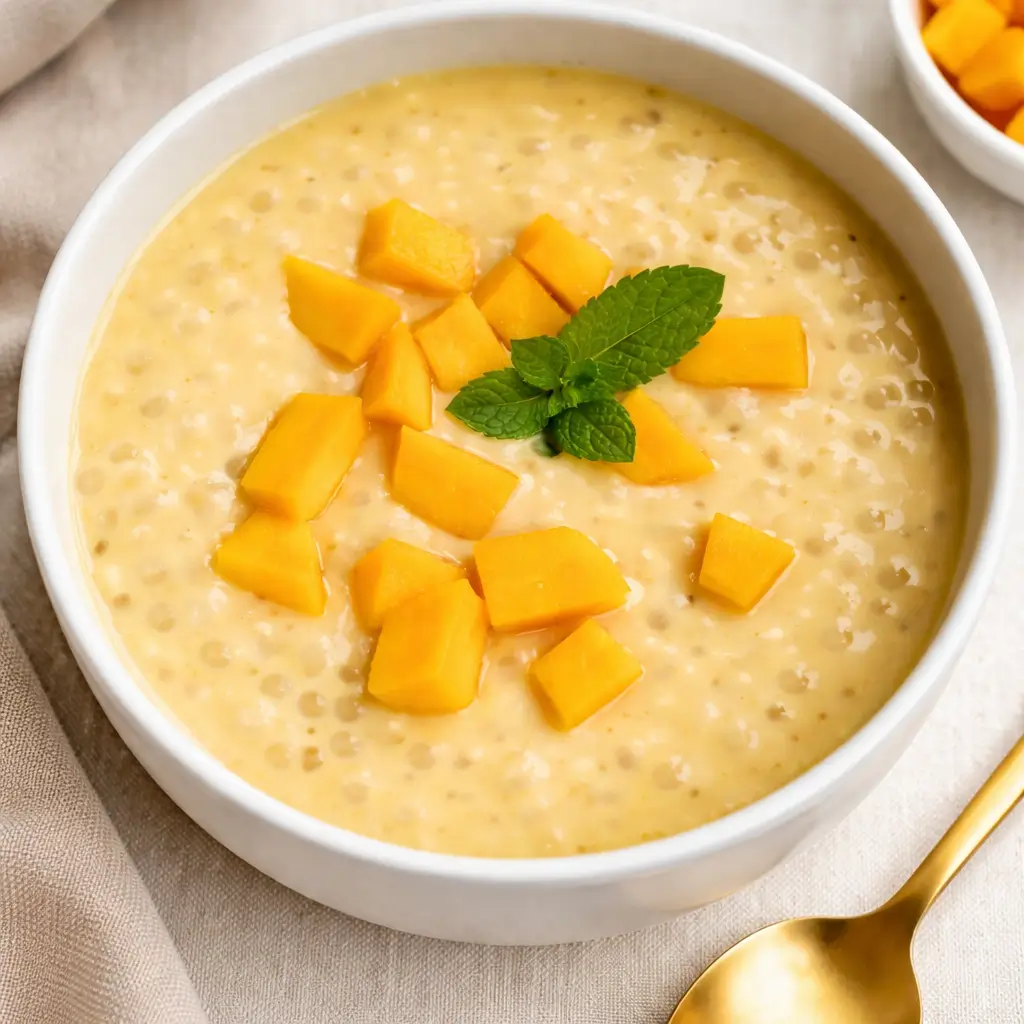
Mango Sago is that dessert you didn’t know you were missing until you tried it. It’s creamy, cool, and fruity — like summer in a bowl. Imagine the sweetness of ripe mangoes blending perfectly with silky coconut milk and chewy little tapioca pearls that pop gently in every bite. It’s the kind of dish that makes you pause and go, “Okay, this is exactly what I needed today.” What’s even better? This Mango Sago recipe takes minimal effort and feels like a luxury dessert straight out of your favorite Asian café.
Whether you’ve had a long day at work or just want something refreshing after dinner, Mango Sago hits the spot every single time. And since this recipe is vegan-friendly (with a quick swap), you can enjoy it guilt-free and even impress your family or guests with its golden, tropical charm.
Table of Contents
What Is Mango Sago?
Mango Sago is a beloved Asian dessert, often found in Hong Kong, the Philippines, and throughout Southeast Asia. It’s a chilled pudding made with creamy coconut milk, chewy tapioca pearls (known as sago), and ripe mangoes. Each spoonful gives you a combination of textures — velvety smoothness from the coconut milk, bouncy pearls for a fun bite, and juicy cubes of mango for that fresh burst of flavor. It’s simple but feels luxurious, kind of like the tropical cousin of tapioca pudding.
The dessert is typically served cold, making it especially refreshing on hot days or as a soothing end to a spicy meal. If you’ve ever enjoyed boba tea or tapioca pudding, Mango Sago will instantly feel familiar — but even better because of that fresh fruit flavor and natural sweetness.
Reasons to Try Mango Sago
If you’re wondering whether you should make Mango Sago, the answer is a big yes — and here’s why. First, it’s incredibly easy. You don’t need fancy tools or complicated steps, just a pot, a blender, and about 50 minutes of your time (and most of that is letting things rest). Second, it’s naturally gluten-free and can easily be made vegan by skipping the condensed milk and sweetening with a bit of sugar instead. Third, it’s family-friendly — both kids and adults love it because it’s creamy but not too heavy, sweet but not overwhelming. And finally, it’s a great make-ahead dessert that chills beautifully in the fridge.
Imagine serving this at a dinner party — it’s light, elegant, and different enough to make people think you’re a culinary genius. Plus, if you love fruity desserts like Cheesecake Stuffed Strawberries or Mini Pineapple Upside Down Cheesecakes, this Mango Sago will fit right in your recipe rotation.
Ingredients Needed to Make Mango Sago
- 1 cup mini white tapioca pearls (sago), uncooked
- 3 ripe yellow mangoes (Ataulfo or honey mangoes are perfect)
- 1 (13.5 oz) can of coconut milk (about 1.5 cups)
- 2–3 tablespoons sweetened condensed milk (or sugar for vegan version)
- Ice cubes (optional, for a chilled version)
That’s it. Just a handful of ingredients to create a dessert that looks and tastes like sunshine in a glass.
Instructions to Make Mango Sago – Step by Step
Step 1: Cook the Tapioca Pearls
Let’s start with the base — those chewy little pearls that give the dessert its signature texture. In a medium saucepan, bring 6 cups of water to a rolling boil over medium-high heat. Slowly pour in the tapioca pearls, stirring gently to prevent them from sticking. Once added, turn the heat down to medium-low. The pearls will dance around in the water like tiny snow globes — keep stirring every few minutes so they don’t settle at the bottom and clump together. Cook for about 15–20 minutes, until the pearls are mostly translucent with a tiny white dot in the center. That dot means they’re almost ready.
Now turn off the heat and let the pearls sit in the hot water for another 15–20 minutes. This resting period is key — it allows the heat to finish cooking the centers gently without overcooking the outside. Once fully translucent, drain the pearls through a fine mesh sieve and rinse them under cold running water. This stops the cooking and removes extra starch. Set them aside in a bowl. If you want to avoid sticking, you can add a splash of coconut milk over the top — a little secret trick for keeping them bouncy.
Step 2: Prepare the Mango Puree
Now for the star of the show — those luscious, ripe mangoes. Slice each mango in half away from the pit, scoop out the golden flesh, and set aside about ¼ cup (roughly half a mango) for topping. The rest goes into your blender. Add the coconut milk and sweetened condensed milk (or sugar, if making vegan) right on top. If you love your dessert icy and cold, toss in a few ice cubes before blending. Then blend everything together until it’s silky smooth and creamy — about one to two minutes.
The color should be a beautiful sunshine yellow, and the texture luxuriously thick but pourable. Taste it. If your mangoes are extra sweet, you may not need additional sugar, but adjust as you like.
Step 3: Combine and Assemble
Now comes the fun part — bringing everything together. Divide the mango mixture into individual serving bowls or glasses. Gently stir in your cooled tapioca pearls, mixing them evenly into the mango cream. You’ll see little pearls suspended like edible jewels. Finally, top each bowl with your diced mango for that fresh, juicy bite at the end. For extra flair, chill it in the fridge for about 30 minutes before serving. The cold temperature makes the coconut milk thicken slightly, giving it that dreamy pudding-like texture.
Step 4: Make It Your Own (Optional Twists)
Want to take your Mango Sago up a notch? Add a swirl of coconut cream on top for extra richness. Or sprinkle toasted coconut flakes for a little crunch. Some people love adding pomelo pulp — a nod to the Hong Kong version called Mango Pomelo Sago — which adds a citrusy tang. You can even fold in diced lychee or pineapple for a tropical medley.
If you’re a dessert lover, you might also enjoy pairing it with something like Fluffy Japanese Cotton Cheesecake Cupcakes for a light and airy finish to your meal.
This recipe is wonderfully forgiving — so once you’ve mastered it step by step, don’t be afraid to experiment.
What to Serve with Mango Sago
Mango Sago shines on its own, but it’s also the perfect dessert after a flavorful meal like Thai curry, spicy noodles, or grilled seafood. The cool creaminess balances out any heat beautifully. For an Asian-inspired dinner spread, pair it with savory dishes such as Hawaiian Chicken Sheet Pan or Lemon Pepper Baked Chicken Breast. And if you want to make it part of a summer dessert bar, serve it alongside other tropical favorites like pineapple, papaya, and passion fruit for a colorful, make-your-own bowl moment.
Key Tips for Making Mango Sago
- Use ripe mangoes. Overripe mangoes can taste fibrous; you want ones that are juicy, aromatic, and slightly soft to the touch.
- Cook sago gently. Overcooking makes them mushy. Keep the heat medium-low and let them rest in hot water to finish.
- Chill before serving. Mango Sago tastes best when it’s cold. Make it an hour ahead and refrigerate.
- Sweeten smartly. Start with less condensed milk and adjust based on your mango’s sweetness.
- For a vegan version, swap the condensed milk with coconut cream or a drizzle of agave syrup.
Storage and Reheating Tips for Mango Sago
Mango Sago is best served fresh, but if you have leftovers, you can store them in an airtight container in the refrigerator for up to five days. Keep the diced mango topping separate and add it fresh before serving. Tapioca pearls tend to firm up when chilled for too long, so if they lose some of their softness, stir in a little warm coconut milk before serving again to revive the texture. Avoid freezing — it changes the consistency of both the mango puree and the tapioca.
FAQs
Can I use frozen mangoes? Absolutely. Just thaw them before blending. The flavor is slightly less intense than fresh mangoes, but it still works beautifully.
Can I use regular milk instead of coconut milk? You can, but you’ll lose that creamy tropical flavor that makes Mango Sago special. Coconut milk gives it that signature richness.
Why are my tapioca pearls sticking together? That’s a common issue! Rinse them well under cold water and toss with a splash of coconut milk to keep them from clumping.
Can I make it sugar-free? Yes, use a sugar substitute like monk fruit sweetener or stevia — just blend and taste until you find your perfect balance.
Can I serve it warm? Technically yes, but it’s meant to be a cold dessert. The magic happens when it’s chilled.
Final Thoughts
Mango Sago is the kind of dessert that feels indulgent without trying too hard. It’s fruity, creamy, refreshing, and wonderfully simple to make. The combination of silky mango puree, rich coconut milk, and chewy sago pearls makes every spoonful taste like a little vacation. So the next time you’re craving something sweet, skip the store-bought pudding and whip this up instead. Follow the step-by-step guide above and treat yourself (and maybe your loved ones) to this tropical delight. And if you’re looking for more light desserts that taste like sunshine, you’ll love our Strawberry Crunch Cheesecake Bites and Healthy Orange Chicken for a refreshing dinner to go with it.
Because honestly, who can resist a spoonful of Mango Sago that melts on your tongue like sweet tropical magic?
Visit our Pinterest for regular slow cooker recipe updates, or join our Facebook discussions where cooking fans exchange their favorite hearty meal ideas.
Print
Mango Sago Recipe: The Creamy Tropical Dessert You’ll Crave
- Prep Time: 10 minutes
- Cook Time: 40 minutes
- Total Time: 50 minutes
- Yield: 4 servings 1x
- Category: Dessert
- Method: Stovetop
- Cuisine: Thai
- Diet: Vegan
Description
Mango sago is a popular Asian dessert that’s creamy, fruity, and refreshing. This cold tapioca pudding treat is easy to make at home with just a few simple ingredients.
Ingredients
- 1 cup mini white tapioca pearls (known as sago), uncooked
- 3 ripe yellow mangoes, such as Ataulfo mangos
- 1 (13.5 ounce) can coconut milk (about 1.5 cups)
- 2–3 tablespoons sweetened condensed milk (to taste)
Instructions
1. In a medium saucepan, add 6 cups of water and bring it to a boil over medium-high heat.
2. Add tapioca pearls and turn the heat down to medium-low. Cook for 15–20 minutes, stirring occasionally to prevent from sticking to the bottom of the pan. The pearls will turn translucent, but may still have a tiny white dot in the center.
3. Turn off the heat and let the pearls rest in the hot water until completely transparent, about 15–20 minutes.
4. Rinse the pearls under running water to cool off and drain in a fine mesh sieve or colander. Set aside.
5. Slice each mango in half away from the pit and use a large spoon to scoop out the flesh. Set aside ¼ cup of the flesh (about half a mango) and dice into cubes for topping.
6. Add remaining mango, coconut milk, and condensed milk in a blender. If you like your sago cold, add 3–4 ice cubes. Blend until smooth, about 1–2 minutes.
7. Divide the mango mixture into bowls. Stir in tapioca pearls and top with cubed mango.
Notes
Mango sago is best served fresh, but leftovers can be stored in an airtight container in the refrigerator for up to 5 days.
To make the recipe vegan, omit the sweetened condensed milk and use sugar to taste instead.
Use ripe, sweet mangoes like Ataulfo for the best flavor.
Nutrition
- Serving Size: 1 serving
- Calories: 250
- Sugar: 18g
- Sodium: 15mg
- Fat: 10g
- Saturated Fat: 9g
- Unsaturated Fat: 1g
- Trans Fat: 0g
- Carbohydrates: 38g
- Fiber: 2g
- Protein: 2g
- Cholesterol: 0mg